How to Get Rid of Clean Fill in Adelaide: The Complete Disposal & Recycling Guide
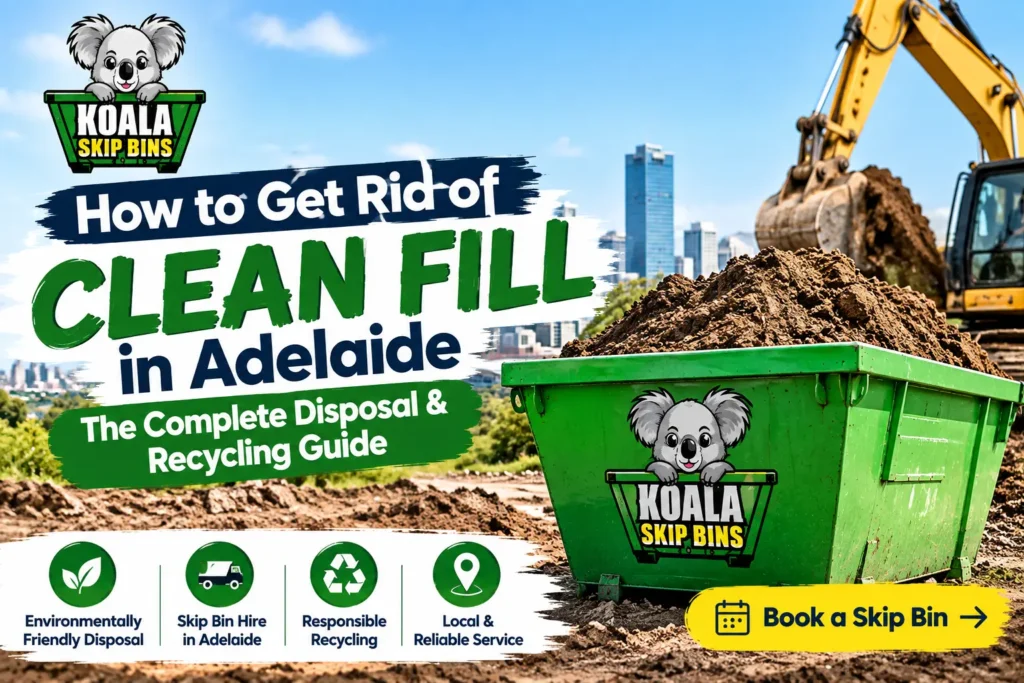
Clean fill is uncontaminated soil, clay, sand, rock, or crushed material that contains no rubbish, chemicals, or hazardous matter. If you need to know how to get rid of clean fill in Adelaide, you have four realistic options: hire a skip bin, book a tipper truck, reuse it on site, or pass it to a licensed recycler. The right choice depends on volume, access, and how clean the material really is.
This guide covers what qualifies as clean fill, how the rules work in South Australia, what each disposal method costs, and the mistakes that turn a simple dig-out into an expensive problem.
What Is Clean Fill?
Clean fill is natural, inert excavated material that has not been contaminated by industrial activity, building waste, or chemicals. In practice, that means:
- Topsoil, subsoil and clay
- Sand and gravel
- Natural rock and rubble-free crushed stone
- Excavated dirt from footings, pools, driveways and trenches
It does not include soil mixed with bricks, concrete, timber, plastic, roots, green waste, or asbestos fragments. Once other materials are mixed in, it becomes mixed or construction waste and is priced and processed differently.
Why Clean Fill Is Harder to Dispose Of Than People Expect
Most homeowners are surprised by two things: how heavy soil is and how tightly it is regulated.
Weight. A cubic metre of dry soil weighs roughly 1.3 to 1.6 tonnes, and wet clay can be heavier. A bin that looks half empty can already be at its weight limit, which is why clean fill usually goes into smaller bins and should never be filled to the brim.
Regulation. In South Australia, the EPA treats surplus soil as waste once it leaves your property. Its Standard for the Production and Use of Waste Derived Fill exists to make sure waste soil is safe for people and the environment, and dumping or reusing soil outside those requirements can count as illegal dumping. The EPA’s landfill guidance also flags that soil from a site with a history of potentially contaminating activity is handled differently to soil from an ordinary residential block. In short: where the soil came from matters as much as what it looks like.
Step 1: Work Out Whether Your Soil Is Really Clean
Before you book anything, run through this quick check:
- Site history — has the land been used for a workshop, service station, factory or fuel/chemical storage? If yes, the soil may need testing.
- Visual and smell test — discolouration, oily sheen or chemical odours are red flags.
- Age of the property — older Adelaide homes can have fibre cement sheeting, and asbestos-contaminated soil cannot go in a standard bin.
- Mixed material — bits of brick, tile, plastic or timber change the classification.
- Volume — large amounts from a single source often attract stricter handling and testing expectations.
If anything is doubtful, get the soil tested before it leaves your property — a lab test costs far less than a rejected load.
Your Clean Fill Disposal Options in Adelaide
Skip bin. The simplest option for most residential jobs — backyard clean-ups, garden bed removal, small excavations and landscaping. You control the timing, filling the bin over a day or a week, and one flat price is usually quoted upfront. Choose a bin size based on weight, not just volume, keep the soil clean (one bag of rubbish can reclassify the load), and never overfill above the bin walls. If you’re searching for small skip bin hire in Pooraka or elsewhere in the northern suburbs, a smaller bin is often the smartest fit for clean fill, since it stays within safe lifting weights while still holding a meaningful amount of dirt.
Tipper truck or excavation removal. For bigger jobs — pool digs, house slabs, large landscaping — a truck-and-excavator service removes soil as it’s dug. Faster on large volumes, but it needs clear access and a scheduled window.
Reuse on site. The cheapest disposal is no disposal. Soil can level lawns, build raised garden beds or create backfill — just store it away from drains and stormwater, cover stockpiles, and check with your council if the volume is large.
Give it away or sell it. Good-quality topsoil has genuine value: community groups, neighbours and online marketplaces regularly take free soil. Be upfront about what it contains, and never hand over soil you suspect is contaminated.
Licensed recycling facilities. Soil and fill recovery is a major part of resource recovery in South Australia — licensed facilities sort clean fill and reuse it as road base, backfill or landscaping material, and your skip bin provider normally handles this step for you.
| Method | Best for | Effort for you |
| Skip bin | Small to medium residential jobs | Low to medium |
| Tipper/excavator | Large volumes (pools, slabs) | Low |
| Reuse on site | Any amount you can use | Medium |
| Give away/sell | Quality topsoil | Medium |
| Recycler drop-off | Small clean loads, own transport | High |
Choosing the Right Skip Bin Size
Waste bin sizes are usually described in cubic metres, but for clean fill think about weight first:
| Job | Typical bin size |
| A few garden beds or a small patch of lawn | Small bin, around 2 m³ |
| A backyard clean-up with dirt from paths or edging | 3 to 4 m³ |
| Trenching, small footings or a shed base | 4 m³, filled to the line |
| Pool, slab or large excavation | Multiple small bins or a truck service |
Bin availability and weight limits differ between providers, so confirm both when you book — a local team can tell you quickly whether your job needs one bin or three.
Tips for Filling a Skip Bin With Clean Fill
- Keep it pure — only soil, clay, sand or rock, no green waste, plastic or bricks.
- Fill to the line, not the top — soil is dense, and overloaded bins can’t be lifted safely.
- Spread the weight evenly, break up big clumps, and keep it dry where possible, since rain adds serious weight.
- Protect your driveway with boards under the bin.
- Order early, before you start digging, so soil goes straight in without double handling.
What Affects the Price?
Skip bin pricing for clean fill depends on bin size and soil weight, disposal facility fees (including the state waste levy on material sent to landfill), location and delivery distance, hire period, and whether the soil is pure or mixed with other waste. Clean fill is heavier than general rubbish, so it’s often priced differently. A transparent local provider quotes a flat price and explains weight limits upfront — for affordable skip bins in Adelaide, ask what’s included and what triggers extra charges, since the cheapest headline price isn’t always the cheapest total.
Common Mistakes to Avoid
- Mixing waste types — a few bricks or a bag of green waste can turn clean fill into mixed waste.
- Ignoring contamination risks — soil from an old industrial site or a property with a chemical history should be tested first.
- Underestimating weight — overloaded bins can be refused or delayed, and asbestos-contaminated soil can’t go in a standard bin at all.
- Dumping it “somewhere quiet” — illegal dumping attracts fines and harms local waterways and bushland.
- Leaving stockpiles exposed — uncovered soil causes dust, erosion and stormwater runoff.
Eco-Friendly Disposal: Where Does Your Soil Go?
Adelaide’s waste industry increasingly prioritises resource recovery over landfill. Clean fill that’s sorted correctly can become road base, backfill or landscaping media — soil is a finite resource, and landfill space is limited. Choosing a provider that sends material to licensed recovery facilities, rather than defaulting to landfill, is an easy way to make your project greener.
Industry Trends Shaping Soil and Waste Disposal in SA
- Stronger focus on contamination. The EPA has developed interim guidance for PFAS in waste soils, and soil from certain sites may now need testing before reuse or disposal.
- Circular economy thinking and levy oversight. Reuse is increasingly encouraged where safe, and landfill operators must report waste fill under the state levy system, keeping disposal traceable.
- Faster hire, transparent pricing. Demand for same-day delivery keeps growing, and customers now expect flat quotes with clear weight limits instead of surprise charges.
Why Choose a Local Skip Bin Company?
A local operator knows Adelaide’s suburbs, access constraints, council requirements and approved recycling facilities — meaning fewer delays and disposal that follows the rules. Koala Skip Bins offers same-day skip bin hire in Adelaide where availability allows, with delivery across the metro area, plus household rubbish removal, renovation waste, green waste, mixed waste, construction waste, furniture disposal and decluttering — one supplier for the whole project.
How to Book a Skip Bin for Clean Fill
- Estimate your volume — measure the area you’re digging (length × width × depth).
- Confirm the soil is clean and remove any rubbish.
- Choose a bin size and confirm the weight limit with your provider.
- Pick a delivery slot and clear the placement area.
- Fill below the line, then call for collection — cover the bin if rain is forecast.
Frequently Asked Questions
What is clean fill, and how is it different from general fill?
Clean fill is uncontaminated natural material, soil, clay, sand, gravel, or rock, with no rubbish, chemicals, or hazardous substances, so it can usually be recycled or reused. General or mixed fill may contain rubble, roots or other waste and is handled and priced differently.
Can I put clean fill in a general skip bin?
Yes, but tell your provider first. Soil is heavy, so it needs the right bin size, and you must not mix it with other waste (bricks, concrete, green waste) if you want it treated as clean fill.
How much does clean fill disposal cost in Adelaide?
It depends on bin size, weight, location and disposal facility fees. Get a written quote stating the weight limit and any extra charges before booking.
Can I dump soil on vacant land or bushland?
No. Dumping soil without permission is illegal and can result in penalties. Always use a licensed facility or a lawful reuse arrangement.
Do I need to test my soil before disposal?
It’s advisable if the site has any history of industrial use, fuel storage, chemical use, or fill of unknown origin.
What about asbestos in soil?
It’s hazardous and needs specialist handling — never put it in a standard skip bin. If you suspect asbestos, stop work and contact a licensed professional.
How much soil fits in a skip bin?
The limiting factor is usually weight, not volume. Fill to the marked line and ask your provider for the weight limit.
Can I reuse excavated soil at home?
Often yes, for levelling, garden beds and backfill, provided it’s clean and stored correctly away from drains.
How quickly can I get a skip bin in Adelaide?
Many local providers, including Koala Skip Bins, offer fast delivery and can often arrange same-day hire, subject to availability.
Skip bin or tipper truck?
Use a skip bin for small to medium jobs where you control the pace, and a truck and excavator for large volumes such as pool digs or slab removal.
What’s the most eco-friendly way to dispose of soil?
Reuse it on site or pass it to someone who can use it. If it must go, choose a provider that sends it to a licensed recovery facility.
Ready to Get Rid of Your Clean Fill?
Check that the soil is clean, pick the right bin size, keep the load pure, and use a local provider who understands Adelaide’s disposal rules. Koala Skip Bins delivers reliable, affordable skip bin hire across Adelaide, from small skip bin hire in Pooraka to full renovation and construction jobs. Call or request a quote today, and we’ll help you choose the right bin for your clean fill.
Recent Posts

About Me
Koala Skip Bins is Adelaide’s trusted waste management solution, providing reliable and affordable skip bin hire for residential, commercial, and industrial needs. We take pride in our eco-friendly approach, ensuring responsible waste disposal and recycling to reduce environmental impact. With a range of bin sizes, flexible hire options, and prompt delivery and pickup, we make rubbish removal hassle-free.



Sign up for our Newsletter
Click edit button to change this text. Lorem ipsum dolor sit amet, consectetur adipiscing elit