
7 Common Mistakes to Avoid When Hiring a Clean Fill Skip Bin in Adelaide
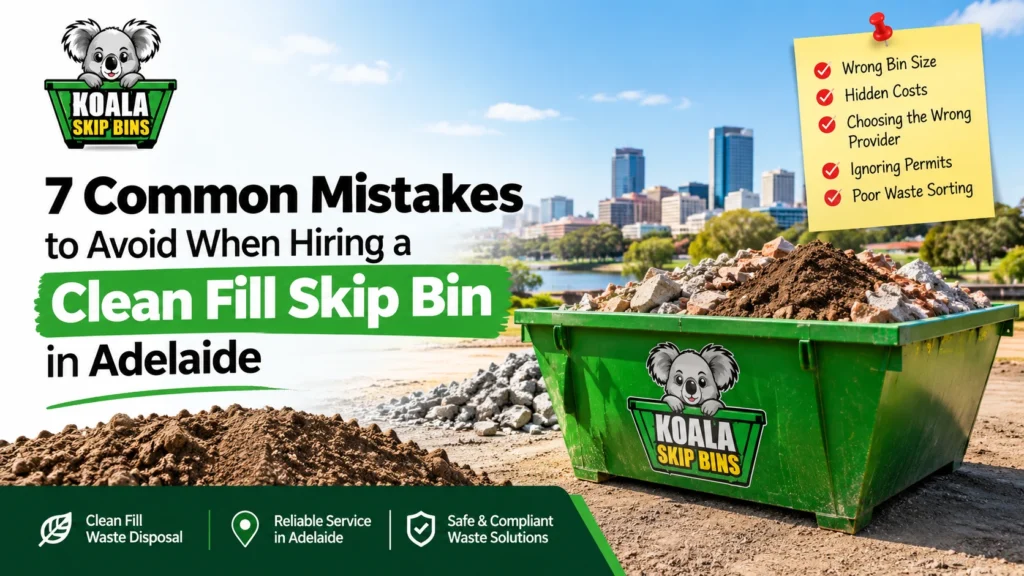
Waste disposal for clean fill projects in Adelaide often gets messy for those trying to be efficient. Although clean fill is categorised differently, many individuals and companies will make mistakes with clean fill bin rentals.
First, clean fill waste is uncontaminated general waste. It means that there is absolutely no general waste like rubbish, wood, plaster, or other green materials. In fact, clean fill is mainly soil, clay, and sand. Unlike general waste, this is inert material. Consequently, landfills treat clean fill differently and have strict regulations for disposing of it.
Below are the seven mistakes we see most often with Adelaide homeowners, landscapers, and builders hiring a clean fill skip bin and how to avoid each one.
1. Mixing Contaminated Material Into a Clean Fill Load
This is the most common mistake and the most expensive. With Clean fill skip bin hire in Adelaide, you get lower pricing because clean fill has a different disposal stream. Most clean fill is repurposed for use as fill. The price will increase with even just one contamination.
Contaminants that get clean fill bins rejected or reclassified include:
- Treated or painted timber
- Plasterboard and gyprock offcuts
- Insulation, carpet, or underlay
- Green waste (roots, turf, branches)
- Asbestos-containing material (ACM)
- General household rubbish, packaging, or food waste
- Oils, paints, or chemical residue on concrete or soil
If a load is contaminated, the operator will typically charge a contamination fee on top of the original hire cost, and in some cases the entire bin gets re-billed at general waste rates. Soil with visible asbestos fragments is a separate issue entirely that material needs specialist asbestos removal and disposal, not a standard skip bin, regardless of what else is in the load.
How to avoid it: Clean the site before the dumpster arrives. Make sure there is nothing but soil, sand, clay, concrete, brick and rubble on the site. If you have any questions, call the rental company before you load it, not after.
2. Guessing the Skip Bin Size Instead of Measuring the Volume
However, skip bins are available in different sizes by volume (2m³, 3m³, 4m³, 6m³, and larger). Clean fill may seem light in appearance, but in reality it is much denser than average household rubbish. A 4m³ skip, which will easily accommodate renovation waste, will get filled very quickly by damp soil and concrete rubble.
Underestimating leads to one of two outcomes: you order a second bin at extra cost, or the bin gets left overfilled, and the operator refuses to collect it until it’s reduced to a safe, legal level for transport.
A rough guide for clean fill specifically:
| Bin size | Approx. use case | Typical weight capacity* |
| 2–3m³ | Small garden bed dig, minor landscaping | ~2–3 tonnes |
| 4–6m³ | Driveway or patio removal, modest excavation | ~4–6 tonnes |
| 8–10m³ | Pool excavation, large landscaping, demolition rubble | ~8–10 tonnes |
*Weight limits vary by provider and bin type always confirm with the company before ordering.
How to avoid it: Calculate the volume by finding the area and the depth of the material that is going to be excavated (length × width × depth). It’s better to go a little bigger. If your project is not a small one, you should call the supplier and explain the situation.
3. Not Checking Council Permit Requirements for Footpath or Road Placement
Adelaide homes lack sufficient space in their driveways to accommodate a skip bin. Where there is a need for the bin to be located on the nature strip, footpath, or road, a permit will most often be needed, and this step is often neglected.
Adelaide councils such as the City of Adelaide, Unley, Burnside, Norwood Payneham & St Peters, Charles Sturt, and many others all have different permit procedures, different costs for permits, and different rules about location. In some instances, where the bin is placed close to the traffic, the use of reflective signs will also be necessary. Failure to place the bin in the right way without the right permit can attract penalties.
How to avoid it: Confirm placement location with your skip bin provider before booking, and if it’s going anywhere other than your own driveway or yard, contact your local council directly to check permit requirements and lead time some councils need several business days’ notice.
4. Overloading the Bin Above the Fill Line
It’s tempting to keep piling material on once a bin looks “nearly full,” especially with loose soil or rubble that compacts under its own weight. But skip bins have a legal fill line for a reason: an overloaded bin isn’t safe to transport, and heavy loads that spill during transit are a genuine road hazard.
Drivers are legally required to refuse collection of a bin that’s overfilled or loaded above the safe transport line. If that happens, you’re left waiting for a second collection attempt after removing excess material yourself which usually means a delay to your project timeline.
How to avoid it: Load heavier material (concrete, bricks, soil) first and flat, keep the load level rather than peaked, and stop at the marked fill line even if there’s visibly more room. If you consistently fill bins above the line, that’s a sign you need the next size up.
5. Choosing the Cheapest Quote Without Checking What’s Included
Clean fill skip bin hire in Adelaide is genuinely one of the more affordable waste disposal options, but the advertised price isn’t always the final price. The mistake is booking on price alone without checking what’s bundled in.
Things that commonly aren’t included in a rock-bottom quote:
- Delivery and pickup fees
- A set hire period (extra days often incur a daily rate)
- Weight allowance (exceeding it triggers per-tonne overage charges)
- Same-day or next-day availability (urgent bookings sometimes cost more)
How to avoid it: Ask for the total cost including delivery, pickup, hire duration, and weight allowance before confirming, not just the headline bin price. A slightly higher quote that includes everything is often cheaper than a low quote with add-ons.
6. Leaving Booking Too Late for the Job Timeline
The clean fill job is typically subject to a tight deadline where the landscaper wants the bin out of the way prior to laying the turf, while the builder wants it out of the way so that the next tradie can come. Booking a skip bin at the very last minute, especially during the peak season of spring and early summer in Adelaide, will find the bin not available.
How to avoid it: Reserve some time in advance where possible and indicate your preferred delivery and pick-up dates in advance. In case there is a deadline for your project, mention it while booking. This will enable them to inform you in advance whether your timeline is realistic or not.
7. Not Confirming Where the Clean Fill Actually Goes
This time it is not about saving money but about doing things correctly. Proper clean fill disposal requires that this material be disposed of at facilities that are licensed to accept inert material and that reuse this material as fill or construction material rather than sending it to the general landfill. Some less expensive or unlicensed companies tend to ignore this procedure, causing problems for those who ordered the bin.
How to avoid it: Ask your provider where clean fill is taken and whether the facility is licensed for inert waste. A legitimate operator will answer this without hesitation.
Clean Fill Skip Bin Hire: Quick Reference Checklist
- Separate contaminated material (timber, plasterboard, green waste, asbestos) before loading
- Measure volume and weight, not just “eyeball” the bin size
- Check council permit requirements if the bin sits on a footpath, nature strip, or road
- Load heavy material first and keep it level with the fill line
- Get a full quote: delivery, pickup, hire period, and weight allowance
- Book ahead, especially in spring/summer
- Confirm the fill goes to a licensed inert waste facility
Frequently Asked Questions
What counts as “clean fill” for skip bin disposal in Adelaide?
Clean fill is uncontaminated, inert material: soil, dirt, sand, clay, concrete, bricks, pavers, and rubble. It must be free of general rubbish, timber, plasterboard, green waste, and any hazardous material. If you’re not sure whether something qualifies, ask your provider before it goes in the bin.
Can I put soil mixed with tree roots or grass in a clean fill bin?
No, green waste (roots, turf, branches, leaves) is a separate waste category and isn’t accepted in a clean fill bin. Mixing it in can get the load reclassified as contaminated, triggering extra fees. If your job involves both soil removal and garden clearing, you may need two separate bins.
How much does clean fill skip bin hire cost in Adelaide?
Pricing depends on bin size, hire duration, and the provider, but clean fill is typically cheaper than general or mixed waste bins because it’s processed differently. Always ask for an all-inclusive quote covering delivery, pickup, the hire period, and the weight allowance so there are no surprise charges.
Do I need a permit to put a skip bin on the street in Adelaide?
If the bin will sit on a nature strip, footpath, or road rather than on private property, most Adelaide councils require a permit, and some mandate safety markers or barricades. Requirements and fees differ by council, so check with your local council before the bin is delivered.
What happens if I overfill my clean fill skip bin?
Drivers can legally refuse to collect a bin that’s loaded above the marked fill line, since an overloaded bin isn’t safe to transport. You’ll need to remove the excess material and wait for a rescheduled pickup, which can delay your project. Keep loads level and stop at the fill line.
What’s the difference between clean fill and general waste skip bins?
Clean fill bins are for inert material only (soil, concrete, bricks, rubble) and are usually cheaper because the waste can often be reused rather than landfilled. General waste bins accept a broader mix of rubbish but cost more and are processed differently. Using the wrong bin type for your material usually leads to extra charges.
Can builders and landscapers get bulk or ongoing rates for clean fill disposal?
Many Adelaide skip bin providers offer better rates for trade accounts or recurring bookings, since builders and landscapers tend to need regular clean fill removal across multiple sites. It’s worth asking directly about trade pricing if this is an ongoing need rather than a one-off job.
What size clean fill skip bin do I need for a small backyard excavation?
For a small garden bed dig or minor landscaping job, a 2–3m³ bin is usually sufficient. For a driveway, patio removal, or more substantial excavation, 4–6m³ is more typical, and large jobs like pool excavations often need 8–10m³ or multiple bins. Measuring the area and depth of material before ordering is the most reliable way to size correctly.
Looking for reliable clean fill skip bin hire in Adelaide?
Koala Skip Bins provides clean fill skip bin hire across Adelaide with transparent pricing, flexible sizing, and proper disposal at licensed facilities so that you can clear soil, concrete, and rubble without the guesswork. Get in touch for a straightforward quote on your next job.
Recent Posts
About Me
Koala Skip Bins is Adelaide’s trusted waste management solution, providing reliable and affordable skip bin hire for residential, commercial, and industrial needs. We take pride in our eco-friendly approach, ensuring responsible waste disposal and recycling to reduce environmental impact. With a range of bin sizes, flexible hire options, and prompt delivery and pickup, we make rubbish removal hassle-free.



Sign up for our Newsletter
Click edit button to change this text. Lorem ipsum dolor sit amet, consectetur adipiscing elit